
Team Coaching: A “Need to Have” or a “Nice to Have”?
Organizations today operate in an environment of constant pressure. Leaders and teams are expected to deliver more with fewer resources, tighter timelines, and rapidly changing team structures.
In this context, team coaching is gaining increasing attention. But an important question remains: Is team coaching truly essential, or is it simply a “nice to have”? The answer is nuanced. Team coaching can significantly accelerate performance and collaboration—but it is not the right intervention in every situation.
Understanding when team coaching is needed—and when it is not—helps organizations invest their efforts wisely.
Why Team Coaching Is Becoming More Relevant
Several shifts in how organizations operate today are driving the rise of team coaching.
Doing More With Less
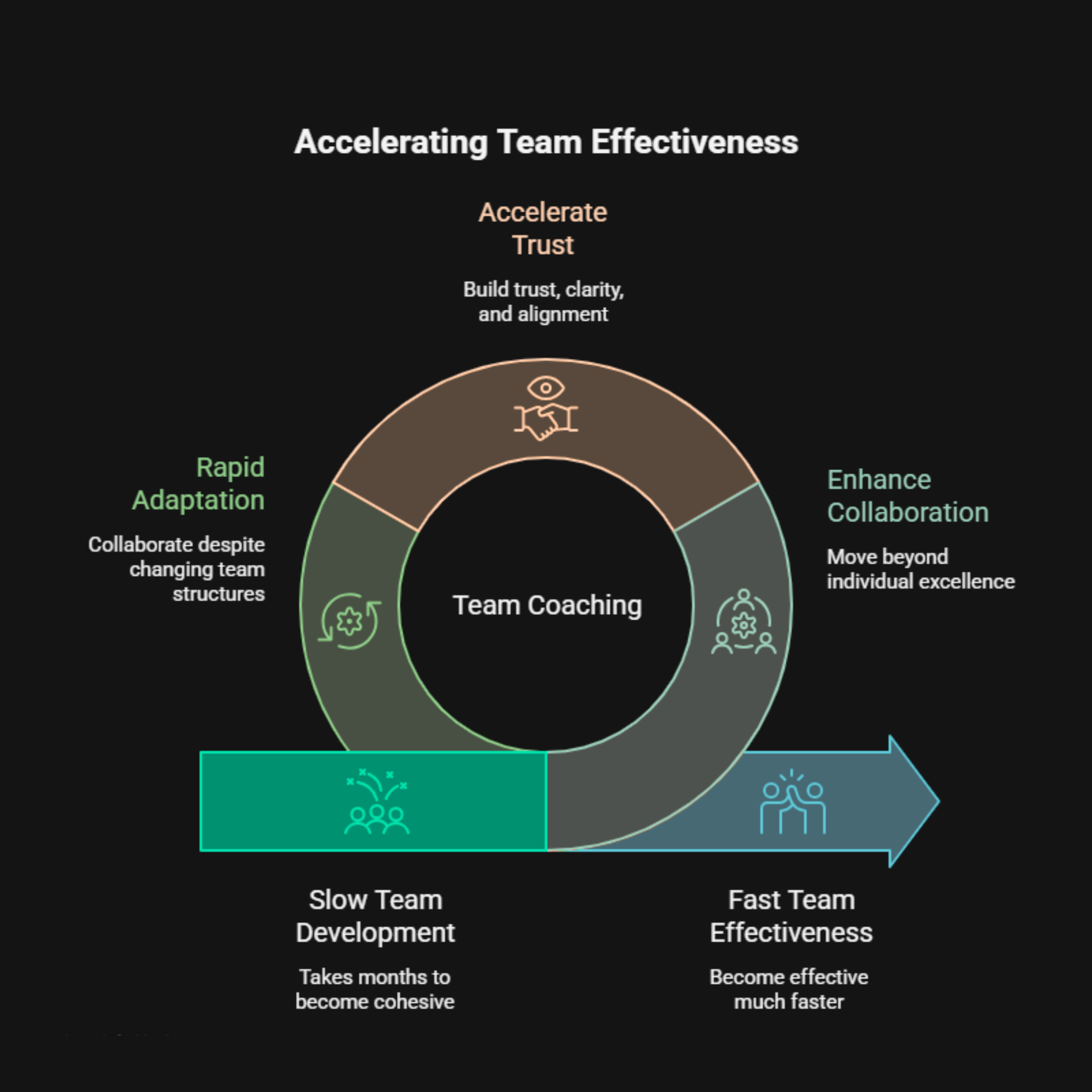
Organizations face intense pressure to achieve more outcomes with fewer resources, less time, and smaller budgets. Success increasingly depends on how effectively people collaborate, not just how well individuals perform. Team coaching helps groups move beyond individual excellence and build collective effectiveness.
Compressed Timelines for Team Effectiveness
In the past, it could take 8 to 12 months for a group of individuals to evolve into a cohesive team. Today, teams often need to deliver results within weeks or a few months, before members disperse to work on new initiatives. Team coaching helps accelerate the natural process of team formation, enabling teams to build trust, clarity, and alignment faster.
Changing Team Structures
The nature of teams has fundamentally changed. The rise of:
- the gig economy
- offshore and distributed work
- geographically dispersed teams
means team membership is constantly evolving. People must collaborate quickly with new colleagues and adapt rapidly to new contexts. Team coaching helps teams build collaboration despite constant change.
When Team Coaching Is NOT Needed
Team coaching is not a solution for every situation. In some cases, introducing it may be unnecessary—or even counterproductive.
They Are a Workgroup, Not a Team
Sometimes individuals work independently toward their own goals while reporting to the same leader. For example, regional sales managers may each pursue their own targets while contributing to a broader organizational objective. If people do not depend on each other to achieve results, they function as a workgroup rather than a true team. In such cases, team coaching may not add value.
Foundational Skills Are Missing
Team coaching cannot compensate for missing expertise or structural gaps. If a team lacks the technical or functional competence required to achieve its goals, the solution may lie in training, hiring, or structural adjustments.
To use a simple analogy: you cannot coach a cricket team that only has bowlers and no batters. The team must first have the right capabilities and composition.
The Team Is in Crisis Mode
Team coaching requires space for reflection and dialogue. When a team is actively dealing with an emergency or constant firefighting, members focus on reacting and coordinating quickly, leaving little room for reflective conversations. Coaching becomes valuable after the crisis, when the team can reflect, learn, and improve.
Toxic Leadership
Psychological safety is a critical condition for team coaching. If a leader is punishment-oriented, closed-minded, or unwilling to reflect on their own impact, introducing team coaching can be damaging. In such situations, the leader may first need individual coaching before the team can benefit from a collective coaching process.
When Team Coaching Becomes a “Need to Have”
While team coaching is not always necessary, there are circumstances where it becomes essential.
When Interdependence Becomes Critical
When a new strategy, objective, or market shift requires individuals who previously worked independently to collaborate closely toward a shared goal, team coaching becomes highly valuable. It helps teams build shared accountability, alignment, and trust.
During Hyper-Growth
As organizations grow rapidly, traditional siloed leadership approaches become less effective. Leadership teams must work across functions and navigate increasing complexity, particularly in matrix structures. Team coaching creates the space for leaders to make sense of challenges and align their actions collectively.
To Accelerate Team Formation
Because timelines are shrinking, organizations cannot wait for teams to naturally evolve into high-performing units. Team coaching helps teams accelerate alignment, clarify roles, and build effective ways of working.
During “Good Times”
A common misconception is that coaching is only needed when something is broken. In reality, team coaching can be most powerful when teams are already performing well. During such periods, teams are more open to reflection, learning, and exploring possibilities. Coaching helps them move from good to exceptional.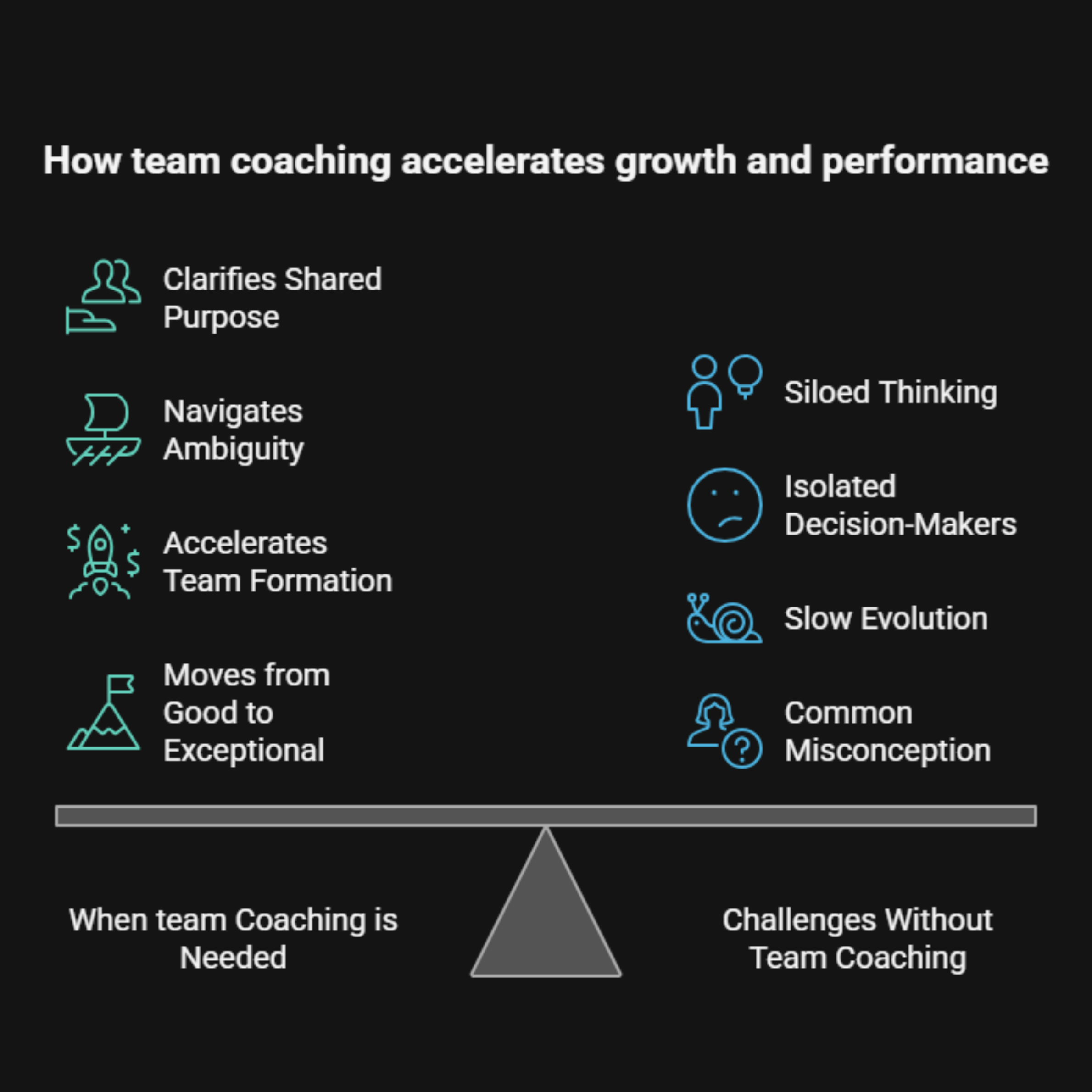
The Strategic Value of Team Coaching
The increasing relevance of team coaching also reflects a broader shift in how organizations approach change. In the past, change was often diagnostic—leaders identified a gap, designed a solution, and implemented it top-down.
Today, organizations operate in environments where change is constant and unpredictable. As a result, organizations are becoming more dialogic—solutions emerge through ongoing conversations, shared sense-making, and collaboration. Team coaching creates the conditions for these conversations. It enables teams to reflect, learn, and adapt together.
So, Is Team Coaching a Need or a Nice to Have?
Team coaching is not necessary for every group. But when organizations face rapid change, compressed timelines, and increasing interdependence, it becomes far more than a luxury.
In these situations, team coaching becomes a strategic capability—helping teams develop the awareness, alignment, and dialogue needed to navigate complexity and adapt to an evolving environment.